priyansh
I put a wealth product inside the apps 20 million Indians already open.
No ads. No begging for downloads. Dezerv’s portfolio tracker lives inside Moneycontrol, Livemint and Inshorts, and the people who find it there become customers.
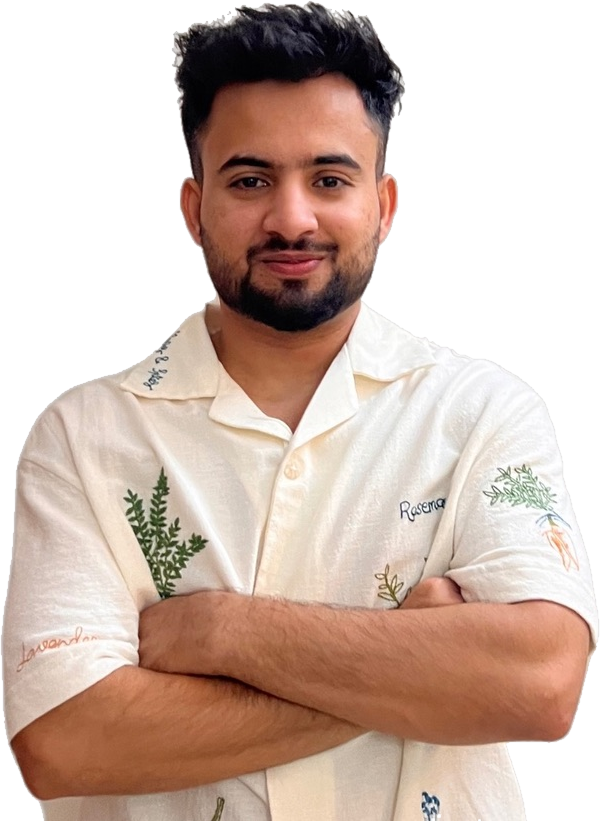
Everyone in my batch was getting placed. I was asking a different question.
BIT Mesra, BCA, class of 2020. Placement season arrived and I watched it happen to other people. I was, at that point, genuinely excellent at exactly one thing, and it was a video game.
The thought that changed everything wasn’t noble, and it wasn’t about games. It was: people are making money from this. How?
Years later I noticed it’s also the first question of product management. Not what do I want to build, but where is value already moving, and can I stand in it?
Curiosity about money makes you look at what people actually do, not what you wish they did.
The unfiltered version. Actual sequence, expensive mistakes included.
Short on time? Chapter 06 is the work I’d defend in an interview.
Ads took my savings. Organic gave it back.
To sell online I had to build a store, so I taught myself web design off YouTube. Then a brand. Then another. Then five more. Seven at once, because I couldn’t tell which one would work.
Then I learned ads, also off YouTube, and spent everything I had waiting for the machine to do what the machine was supposed to do. The money ran out before the sales showed up.
So I stopped paying and learned SEO instead, on my own dead stores. The safest lab I’ll ever get: nothing left to break.
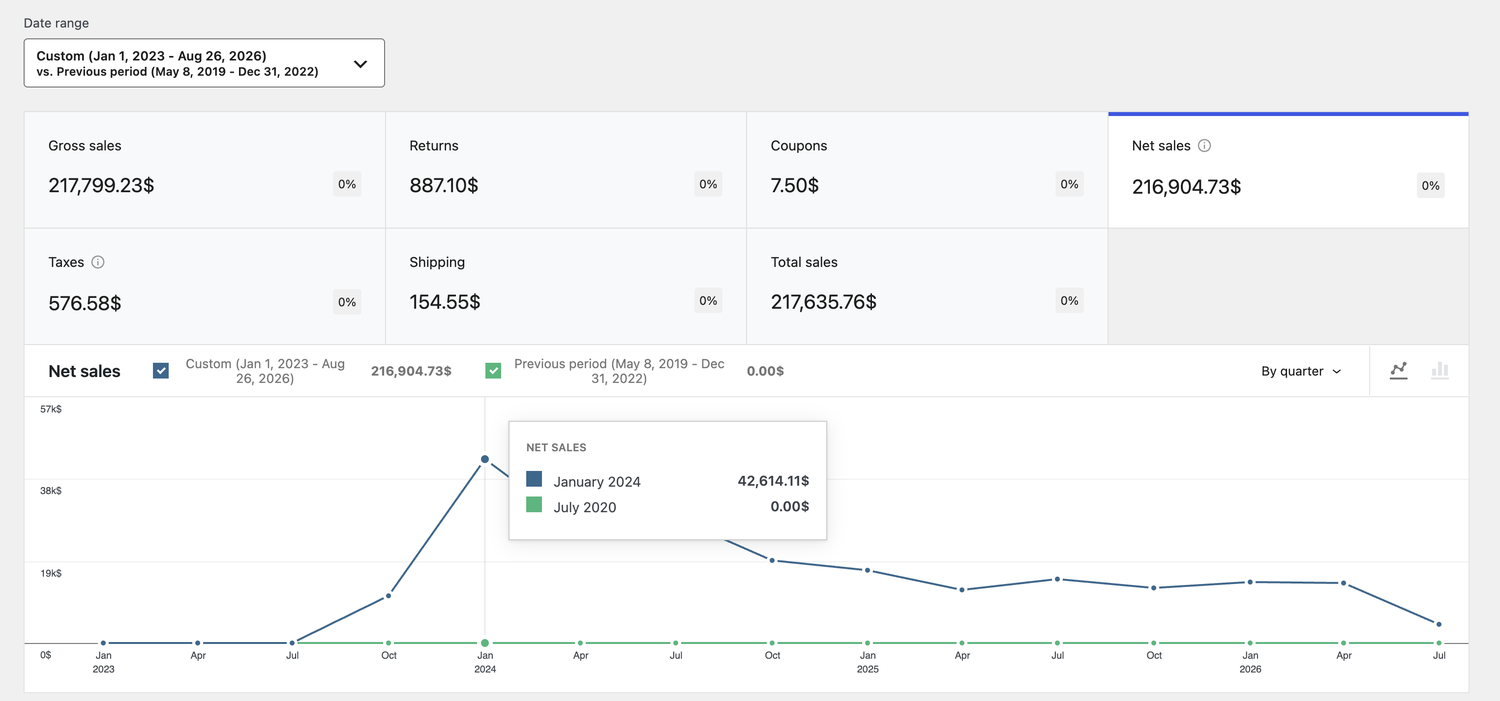
Then one started ranking. Not vanity terms. Money keywords, position one. That single site has done $217,799 and still pays me today, with no ad spend behind it.
Paid attention is rented. The second you stop paying, it’s gone. Organic attention is owned.
I cold-messaged an agency owner in Australia.
Ranking my own store proved the craft worked. It didn’t teach me how it works at scale, for clients, with money and reputations attached.
So I found the person who did it for a living. Not a recruiter. The owner of an SEO agency in Australia. No degree, no portfolio. Just a store I’d dragged to page one by hand.
That was enough. He took me on as an intern and taught me the parts YouTube leaves out.
And the half I hadn’t expected: clients and stakeholders. How to run a call where the client is unhappy. How to say no to a request that would hurt their results. That’s most of what I do now as a PM.
Find the person who does it for a living and make yourself useful. Asking is free. The worst outcome is silence.
Client management. Running the relationship, not just the deliverable.
Stakeholder management. Getting a yes from people who don’t report to you.
Reporting that survives scrutiny. A client can fire you on a Friday.
I built a team out of the people I used to play games with.
Search Combat, May 2020. I went from intern to SEO Team Lead over two years, running 37+ enterprise campaigns at once across sites with genuinely complicated architecture, with a team of 7, full ownership of client reporting and retention, and the actual job of a lead: planning the work, distributing it, and getting it delivered on time by people whose week I was responsible for.
The part I’m proud of: I didn’t hire people with SEO on their CV. I went back to the friends I used to play games with and taught them from scratch.
They were good at it. Gaming is pattern recognition, fast iteration and an unhealthy relationship with a scoreboard, which is most of the job description for growth.
Talent is mostly unlabelled. The best people I’ve worked with were ones nobody else was looking at.
Traffic was easy. Deciding what to build first was the job.
Hired as an SEO Analyst, promoted inside a year. What I ended up owning was the investor tools: the Bonds Directory, the FD calculators, gold and silver rates.
Finance is a YMYL category, Your Money or Your Life, which Google holds to a far higher bar than almost anything else. You don’t outrank an established platform by publishing more. You outrank it by proving E‑E‑A‑T on every page: experience, expertise, authoritativeness, trust.
So the operation was built for that. Subject-matter experts reviewing claims, named authorship, and a review workflow that kept SEBI-sensitive language out of published copy. That’s what made 500+ articles a month safe to ship instead of a compliance risk.
Then I sequenced the roadmap on two questions: which quick wins compound, and which of these maps to what Wint actually sells? That’s why the Bonds Directory shipped first. It pointed straight at the product, so interest carried through to a purchase instead of stopping at the page. Organic went 7K to 153.4K a month, but the sequencing is what I took forward.
In a YMYL category, trust is the ranking factor. Earn it first, then decide what to build in the order that connects a user’s question to what you actually sell.
5 editors, 7 subject-matter experts, multiple agencies. Built so nothing shipped that a regulator could object to.
Same question as Wint. Twenty million people bigger.
Same question as Wint, much bigger surface: where does the intent already sit? Instead of buying wealth customers through ads, the exact thing that killed seven of my brands, we put Dezerv’s tracker inside the apps people already open every morning: Moneycontrol, Livemint and Inshorts.
The decision I’d defend hardest: I scoped the MVP as portfolio tracking, not full onboarding. Small compliance surface, faster partner sign-off, and a reason to open it daily.
Sole PM across three external partner engineering teams. Then the loops that compound: daily portfolio movement and news tied to what you hold (+38% repeat engagement), and lead scoring so sales called the right people first (+21% lead-to-call).
Alongside it, organic went 10K to 140K sessions a month, now 29% of new eligible-lead signups.
Seven dead brands taught me this the expensive way. Don’t rent the road. Build on one that already exists, or build your own.
Six years earlier I couldn’t get one person to buy one thing from seven different stores. The difference isn’t that I got smarter about ads. It’s that I stopped trying to buy a road and learned to build on one.
I’m a product manager who came up through growth.
Which means I have never been able to separate “is this good?” from “will anyone ever find it?” To me those are one question. Seven dead brands are why.
What I’m good at
Zero-to-one distribution. Finding where demand already sits and building the thing that meets it there. Plus the unglamorous half: getting three companies who don’t report to me to ship the same spec on the same date, inside a regulator’s rules.
Where I want to go
Deeper product ownership in fintech and wealth. A bigger surface than one channel, and a team to build rather than a funnel to run. I’ve done 0→1 inside someone else’s app. I’d like to do it on our own.
What I bring
Six years that compound: YMYL and E‑E‑A‑T content strategy, growth economics, regulated-product instincts, and enough hands-on building that engineers argue with me about the right things.
I’ve led individual contributors and external teams, not an org of PMs. I’m not a design-led product manager. Better you know that from this page than from four rounds of interviews.
If any of that sounds useful, let’s talk.
Hiring, building a distribution channel, or stuck getting three companies to agree on one spec. That last one I’ve actually done.